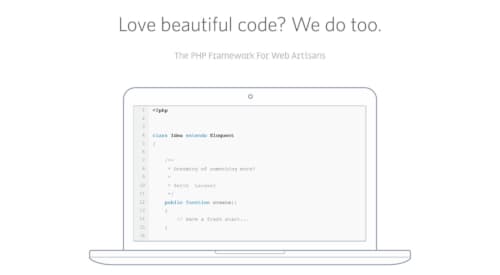
Introduction to Laravel
- Ross Edlin
- 18th Sep 2023
DRAFT
Laravel is an open-source PHP web framework that follows the Model-View-Controller (MVC) architectural pattern. It was created by Taylor Otwell and was first released in 2011. Laravel is designed to provide a simple and elegant syntax while offering powerful features to build robust web applications.
Key features of Laravel include:
Eloquent ORM
Laravel's ORM (Object-Relational Mapping) called Eloquent allows developers to interact with databases using an expressive and easy-to-understand syntax. It simplifies database operations and helps maintain a consistent codebase.
Blade Templating Engine
Laravel comes with a templating engine called Blade, which allows developers to create dynamic and reusable views. Blade templates make it easy to include partials, extend layouts, and manage control structures in the view layer.
Routing
Laravel provides a clean and straightforward way to define application routes, making it easy to map URLs to specific actions in the controller.
Middleware
Middleware in Laravel allows you to filter HTTP requests entering your application. This can be useful for tasks like authentication, logging, and handling CORS (Cross-Origin Resource Sharing).
Authentication and Authorization: Laravel includes a robust system for handling user authentication and authorization. It simplifies tasks such as registration, login, and password reset functionalities.
Artisan CLI
Laravel provides a command-line interface (CLI) called Artisan, which automates common development tasks. Developers can create their own custom Artisan commands to streamline repetitive tasks.
Database Migration
Laravel's migration system enables developers to version control the database schema. It simplifies the process of modifying database structures and ensures that all team members are working with the same database structure.
Testing
Laravel supports unit testing and provides tools to test applications to ensure they work as expected.
Laravel has gained significant popularity in the PHP community due to its ease of use, extensive documentation, and active developer community. It has become one of the leading PHP frameworks used for building web applications, from small websites to large-scale enterprise applications.